
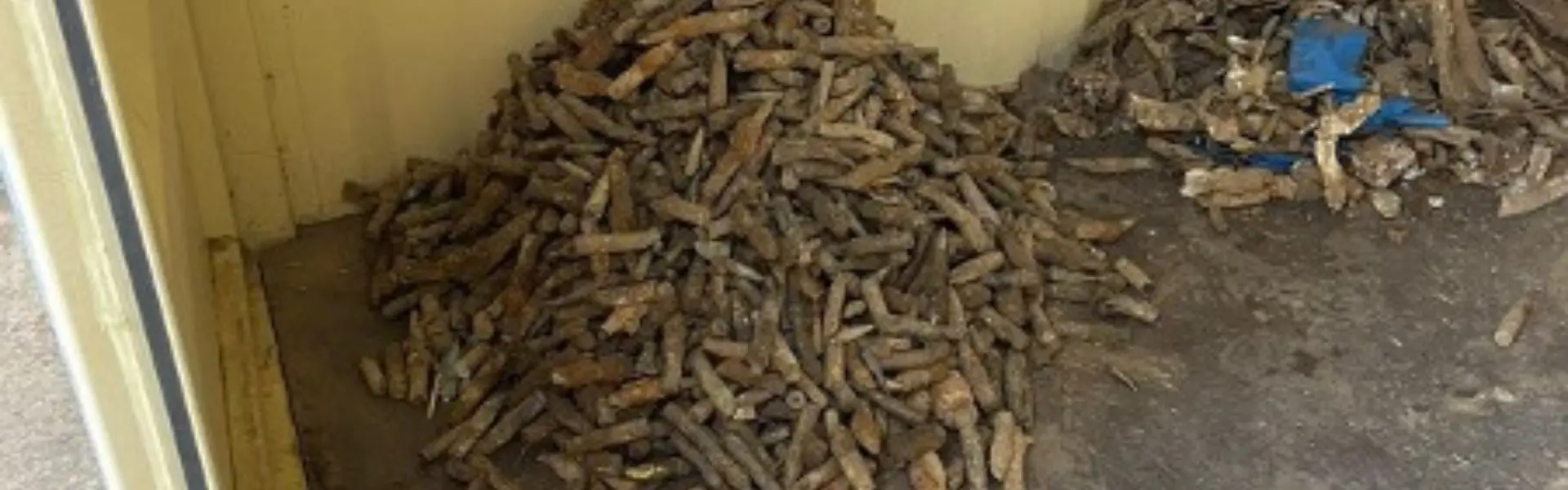


Home Guard Munitions Still Surface
When the Second World War ended, Britain breathed a collective sigh of relief. The threat of invasion had passed, the blackouts lifted, and communities across the country turned their focus to celebration, recovery and rebuilding everyday life. But not everything from the war years was neatly accounted for.

During the conflict, members of the Home Guard (HG) were rapidly mobilised and issued with weapons and ammunition to defend the UK in the event of invasion. This included rifles, ammunition, mortar rounds and hand grenades.
When peace returned, many of these items were formally handed back. Others, however, were not.
In the rush to move on, some weapons were quietly stored away - buried in gardens or allotments, hidden in sheds, lofts or garages, or sealed inside biscuit tins and forgotten in attics.
Over time, memories faded, homes changed hands, and those hidden remnants of wartime Britain slipped out of living memory.
Until they resurface – as these examples demonstrate:
- A cache of phosphorous grenades was found buried underneath a school during construction works in Swindon – November 2022
- Unexploded spigot mortar round, used by the HG in WWII, found and disposed of in Cornwall, January 2021
- 24 WWII SIP grenades found buried in a field in Suffolk – May 2019
- A cache of 80 phosphorous grenades buried by the HG found in Eastbourne – September 2015
- Box of WWII grenades pulled from the sea in Whitstable – August 2011
Grenades Discovered Over Christmas
The most recent reminder of risk was over the Christmas period when two grenades were discovered in Norfolk, prompting a controlled response by the authorities. The incident led to BBC Radio Norfolk inviting Igne UXO specialist, and seasoned media adviser, Matty Shaw to speak on air today about why these finds still happen - and why they continue to matter.
While many people associate unexploded ordnance (UXO) with large aerial bombs dropped during the Blitz, the reality is broader and often more domestic. Small-scale munitions such as grenades, ammunition and practice ordnance can still pose serious risks, particularly when disturbed during building work, gardening or redevelopment.
Not Just a Problem of the Past - Or of Bomb Sites
Igne is widely known for managing the risks associated with large unexploded bombs on major infrastructure and construction projects. But UXO risk is not confined to former bomb sites, airfields or military installations.
Any area that is being developed or redeveloped, from housing extensions and brownfield regeneration to utilities work and landscaping, can be affected. Residential land, farmland, allotments and former industrial sites may all carry hidden risks shaped by how land was used decades ago.
Crucially, many discoveries are made entirely by chance: during excavation, foundation works, drainage installation or even routine garden digging. Do you remember the Plymouth bomb – it was a 500kg German air dropped bomb found when someone was digging in a garden. It prompted a mass evacuation of homes and a huge response from the British Army and Navy to excavate, remove and safely dispose of.
Understanding the Risk Before You Break Ground
This is why early UXO risk assessment is so important.
Igne has developed a free, easy-to-use UXO Risk Map that allows anyone - from homeowners and developers to consultants and planners - to quickly understand whether a site may be at risk based on historical data and wartime records.
It’s a simple first step that can prevent delays, reduce uncertainty and, most importantly, keep people safe.
If You’re Unsure, Talk to Us
Discovering a suspicious object can be unsettling, but help is available. Igne’s specialist UXO team provides expert advice, risk assessments and mitigation services across the UK, from initial desk studies through to on-site investigation and clearance.
If you’re planning work on land of any kind - from development and redevelopment to utilities, landscaping or groundworks - take a moment to understand the risk first. Our free UXO Risk Map is a simple starting point, and our team is always available to talk through what it means for your site.
If something unexpected has already been found, the advice is different and very clear. Do not touch it. If it is safe to do so, take a photograph and note the location (using a tool such as what3words). Then contact the police immediately whilst maintaining distance from the suspicious item.
And in all cases, our advice is straightforward: don’t guess the threat level, and don’t ignore the risk.
Use the risk map; and if you’re still unsure, talk to us - we’re here to help.
Because the echoes of history can still lie just beneath our feet - and managing them safely is how we make progress possible.
[Image citation: Phil Harris]
Other articles of interest
Expert Opinion for the BBC
As news coverage of the Plymouth bomb find continues, Igne's Explosive Ordnance Disposal (EOD) and research experts have been cited by the BBC and regional press, and have provided insight into what the Army may do next, and how insurers may involve an 'occasioned by war' clause to avoid paying out for any potential damage.

How Igne’s UXO risk assessments keep clients on time and budget
Igne’s research team create detailed UXO risk assessments so clients can determine the risk level of their sites.